The Ride on the Red Arrow

STUDY ABROAD – PART III

Share

In the last installment of Study Abroad…

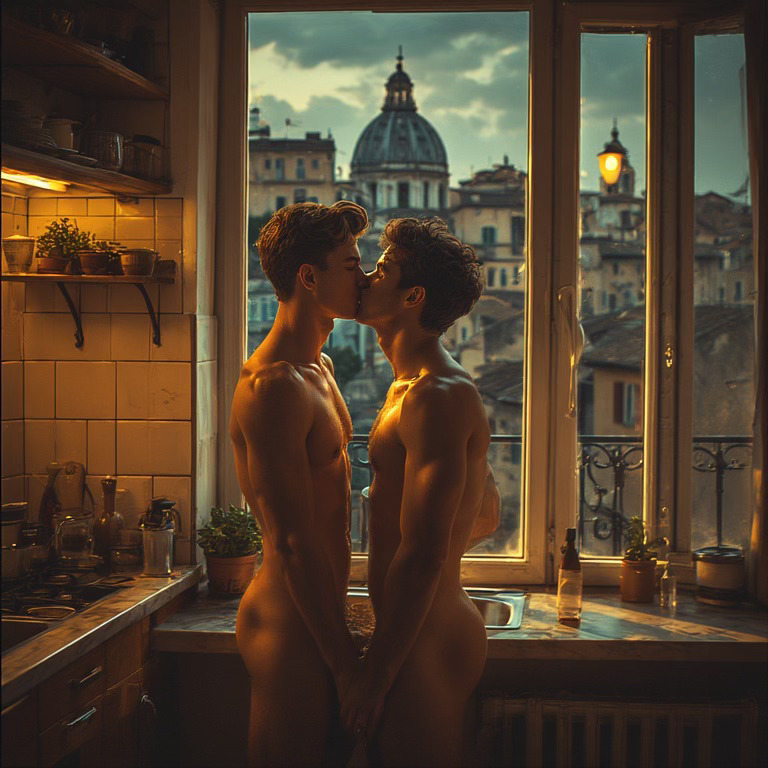
The Kiss on the Balcony
In the last installment of Study Abroad…

By Wednesday, Marco had taken up more mental real estate than I wanted to admit. I’d replayed Florence so many times it felt like I’d lived there a week instead of a day—the crowded markets, the quiet press of his shoulder against mine, that glance he’d given me in the museum that had nothing to do with David.

And yet, for all of that, Marco was still… an enigma.

Where did he go when he wasn’t on campus? Did he live nearby? Did he have family in the city? Friends? A girlfriend? Or did he just appear on that garden bench like a video game NPC, respawning whenever I happened to walk by?

I told myself I wasn’t going to think about him today. Which was exactly why I spoke up in class for the first time all week.

Professor Marchetti was deep into a lecture on EU foreign policy, gesturing toward the map projected behind him. Normally I would’ve been quietly taking notes, only half absorbing the details, but when he opened the floor for discussion, my hand went up before I even realized it.

“I think it’s less about the treaties themselves,” I said, “and more about the fact that so many of them were designed to prevent wars we haven’t had to fight yet. Which makes them harder to defend in the present.”

A few heads turned. Marchetti smiled like he’d been waiting for this. “So you’re saying the absence of conflict actually weakens the argument for maintaining the mechanisms that prevent it?”

“Pretty much, yeah,” I said. “It’s hard to measure what didn’t happen.”

We went back and forth for a while—him probing, me answering—until I realized the rest of the class was watching us like a tennis match. By the time we wrapped, I felt almost… lighter. I’d made it through an entire period without thinking about Marco.

That lasted exactly as long as it took me to cross campus toward the gate.

The wisteria was thinner now, its purple fading into green, but the bench was exactly the same. And so was he.

Marco looked up as I approached, closing his sketchbook with one hand and standing in a smooth motion. “Have you ever seen a dead Pope?”

I blinked. “I think it’s safe to say I haven’t seen or been to any place you’re going to suggest.”

He smiled, a flash of something conspiratorial in his eyes. “Yeah,” he said, “but it’s more fun this way.”

Marco didn’t wait for me to answer. He just slung his bag over his shoulder and nodded toward the gate like it was already decided.

“Come on,” he said, starting down the hill.

I followed, half because I was curious, half because there was something about the way he said come on that made it feel like a challenge.

The streets outside campus were alive with the late-morning rhythm—scooters weaving between cars, shopkeepers sweeping their doorways, the smell of coffee drifting from a café we passed. Marco walked like he belonged to the city, not in a loud or showy way, but like it knew him back.

“So where exactly are we going?” I asked as we crossed a narrow piazza.

“Vatican City,” he said. “St. Peter’s Basilica. You’ll see the tombs of the Popes. Some of them go back centuries.”

“And this is how you usually spend your Wednesdays?”

He shot me a sideways glance, smirking. “This is how I spend them when I’ve got company worth showing around.”

I tried to ignore the way that landed, focusing instead on the cobblestones under my shoes. “And what exactly qualifies as ‘worth showing around’?”

“You’ll figure that out, Iowa,” he said, and left it at that.

By the time the broad sweep of St. Peter’s Square opened up in front of us, I’d stopped pretending I wasn’t impressed. The massive colonnades curved like open arms, framing the dome that rose against the bright sky. The air felt different here—quieter, despite the steady flow of tourists, like the place itself was holding its breath.

We crossed the square, the sun glinting off the marble. I caught myself watching the way Marco moved—unhurried, sure-footed, the easy set of his shoulders as if the whole trip had been planned with this exact moment in mind.

Inside, the cool air wrapped around us, carrying the faint scent of incense. The vast space seemed to swallow sound, every footstep echoing under the high, ornate ceilings.

Marco leaned slightly toward me as we stepped into a side aisle. “Down there,” he said, nodding toward a roped-off stairwell. “That’s where you’ll find them.”

The stairwell narrowed as we descended, the air cooling with each step. The murmur of voices from above faded, replaced by the soft shuffle of feet and the occasional click of a camera shutter.

The light down here was different—softer, gold-tinged, spilling from hidden fixtures that caught on marble surfaces and centuries-old inscriptions. The tombs were quiet in a way that didn’t feel empty; more like the air itself was aware of what it was holding.

Marco slowed just ahead of me, his hand brushing the wall as he passed an alcove where a white marble effigy lay in eternal repose. “That’s Pope John Paul II,” he murmured, as if raising his voice would be out of place here.

I stepped closer, the details pulling me in—the folds of carved fabric, the serene set of the face. My shoulder was nearly against his now, the low ceiling and narrow aisle bringing us into the same pocket of space.

“It’s strange,” I whispered. “Seeing someone so… important reduced to this.”

Marco glanced at me, his expression unreadable in the dim light. “That’s the thing about history, Iowa. It’s always right under your feet. Sometimes literally.”

We moved on, our steps slow. The air felt heavier here, the weight of centuries pressing in. A few tourists passed in the opposite direction, their footsteps muffled against the stone.

At one point, the path narrowed to let another group by, and Marco’s arm brushed against mine. Neither of us moved to create more space. In the quiet, the heat from his body felt sharper, more noticeable.

We stopped before another tomb—this one older, the name worn nearly smooth by time. Marco’s voice was low again. “Michelangelo worked on part of the basilica above this. Imagine walking through the city and knowing your hands built the thing that crowns someone’s grave.”

I didn’t answer right away, caught between the gravity of the place and the awareness of how close we were standing. The scent of his cologne lingered faintly under the cool air, and when I finally glanced at him, he was already looking at me.

The moment stretched—not long enough for anything to happen, but long enough for me to know it could.

The stairs opened back into the basilica’s main floor, the air instantly warmer and brighter. Sound returned too—the faint echo of footsteps on marble, the soft hum of voices drifting upward into the dome.

Marco steered me toward a side chapel, lowering his voice again. “Over here,” he said, nodding toward a glass case in the corner. Inside, a figure lay dressed in ornate vestments, the skin wax-pale and impossibly smooth.

“Is that—?”

“Yep,” Marco confirmed. “Pope John XXIII. Preserved in wax over his remains. Looks like he’s about to sit up and give a sermon.”

I took a half-step back, not sure whether to be impressed or unsettled.

“And over there,” Marco added, pointing toward another chapel, “Pope Pius X. Same treatment.”

We moved on, the basilica unfolding around us in bursts of light and color—gilded ceilings, soaring columns, mosaics so detailed they looked painted. Marco stopped here and there to point out something I would’ve walked right past: a carving tucked into a pillar, the name of a sculptor I’d never heard of.

By the time we circled back toward the main doors, the sunlight outside had shifted, angling through the high windows in sharp golden stripes.

“So,” Marco said as we stepped into the square, “food?”

I turned to look at him. “You want to get food… after seeing all that?”

His mouth curved into that smirk again, easy and unbothered. “Dead people make me hungry.”

I shook my head, but I followed him anyway, the weight of the basilica still hanging in my chest—and the quiet hum of being exactly where he’d led me.

We didn’t head straight for dinner. Marco led me through a side street that dipped toward the river, the evening air warm but soft, carrying the faint scent of water.

We crossed under a low stone bridge strung with strands of lights that reflected in the Tiber below. The water moved slow and dark, catching the glow in broken, glittering pieces. Marco’s voice dropped as we walked, telling me about the bridge—the markets that used to spring up here in the summer, the way the city changed when the festivals came through.

By the time we climbed the steps back to street level, the sounds of the river had given way to the pulse of the city—scooters zipping past, conversations spilling from open café doors, the clink of glasses in the distance. We drifted through narrow cobblestone lanes, the tall buildings leaning close overhead, until the space opened suddenly into the wide, glowing oval of Piazza Navona.

The square was alive—artists with canvases propped along the edges, fountains lit in soft gold, the smell of roasted chestnuts mingling with garlic and fresh bread from the surrounding restaurants.

Marco steered us toward a small pizzeria with tables spilling out under the lights. We slid into chairs across from each other, a street musician’s guitar threading quietly through the air.

The pizza arrived—thin, blistered crust with ribbons of mozzarella and fresh basil—and I was halfway through my first bite when I felt it: the brush of Marco’s foot against mine under the table. Light. Testing.

I glanced up at him. He was sipping his drink, eyes on me over the rim of the glass like nothing had happened.

I nudged back.

The next brush lingered, his toes pressing lightly against my ankle before sliding away again. It was a game now, one neither of us acknowledged out loud. Our conversation drifted easily—about the basilica, about how I still couldn’t believe the Popes’ tombs were just there—but every time his foot found mine, my words felt a little less steady.

By the time the plates were empty, the air between us felt as warm as the pizza oven.

We left Piazza Navona with the night settled soft around us, the streets glowing under the warm spill of lamplight. The air had cooled, but the energy from dinner lingered, humming quietly in the space between us. Every now and then, our arms brushed as we walked, and neither of us bothered to adjust.

By the time we reached my building, the rest of the neighborhood had gone quieter—just the occasional murmur from an open window, the distant rumble of a scooter on another street. I unlocked the door, holding it open for him, and we stepped into the dim, familiar hush of my apartment.

Marco’s gaze moved lazily around the room, and then stopped.

Two photos hung on the wall above the small table by the window. In the first, two hands—mine and his—reached toward the camera, each holding a cup of gelato, the colors bright against the blurred street behind them. In the second, the two of us stood on either side of David, our smiles a little crooked, the marble giant rising between us.

He tilted his head. “Nice decorations,” he said, and there was something in his tone—not teasing, not quite serious, either.

I shrugged lightly. “I felt inspired.”

When I looked back, he was already closing the distance. No rush, just the steady steps of someone who’d already decided what came next.

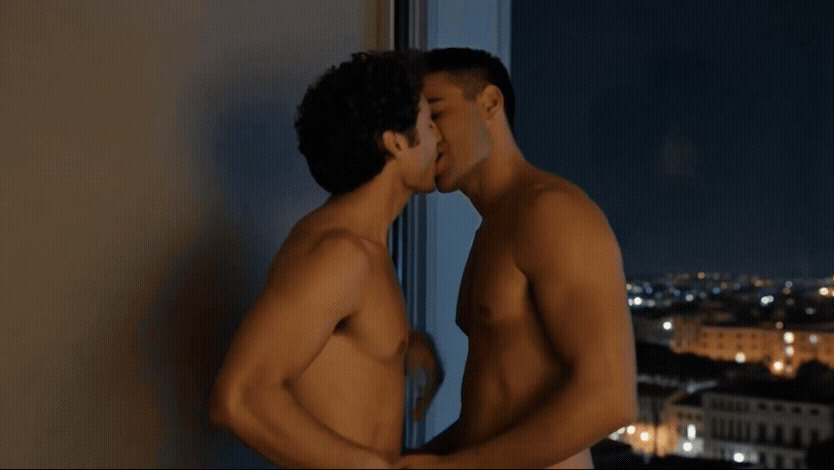
His hand came up to my jaw, fingers warm against my skin, and then his mouth was on mine—familiar enough to ground me, new enough to make my pulse jump. The kiss was unhurried, deepening just enough to remind me of the footsie under the table, the warmth of his hand on my back under the bridge, the way he’d led me through the basilica like it was his own.

When he pulled back, he stayed close, his thumb brushing the edge of my cheekbone, eyes searching mine like there was something else he wanted to say but wasn’t ready to yet.

Marco’s hand lingered against my cheek, his thumb brushing lightly back and forth. His eyes flicked toward the hallway, then back to me.

“Your roommates?” he asked, voice low.

“In Milan for the rest of the week,” I said.

The corner of his mouth curled into a slow smile, the kind that didn’t need words.

I got the picture.

His mouth found mine again, this time with more urgency, the kind that pressed us closer until I could feel every line of his body against mine. My hands slid up his back, pulling him in, and he pushed me gently but insistently toward the hallway.

We stumbled together down the short stretch to my bedroom, breaking the kiss only long enough to catch our breath before finding each other again. His fingers caught in the hem of my shirt, tugging it upward as my back hit the doorframe.

The bedroom was dim, shadows stretching across the bed from the streetlamp outside. We fell onto the mattress in a tangle, mouths still locked, knees knocking as we shifted closer, hands moving without hesitation now.

It was fast, messy, and entirely uncalculated—like the last few weeks had been winding toward this moment without either of us saying it out loud.


We hit the mattress hard enough to bounce, laughter breaking through for a second before Marco’s mouth was on mine again, deeper now, his hand cupping the back of my neck. The taste of him—faintly sweet from the wine at dinner, warm—pulled me in like I’d been holding my breath for weeks.

My shirt was the first to go, peeled over my head in one smooth motion. His hands skimmed down my chest, fingertips dragging just enough to make my stomach tighten. He kissed me again, slower this time, his lips brushing mine like he wanted to memorize the shape before taking more.

I pushed him back just enough to pull at his shirt, and he let me, the fabric sliding away to reveal skin warm from the walk back, muscles shifting under my palms.

The streetlight outside threw soft amber across the bed, catching the line of his jaw, the curve of his shoulder as he leaned over me. His hands moved with a kind of certainty—not rushed, but deliberate—tracing down my sides, over my hips. Every touch seemed to leave a trail of heat in its wake.

The air between us had shifted—heavier now, charged in a way that made every inch of my skin feel awake. My jeans slid off with a low rasp of denim, followed by the soft thud of his hitting the floor.

Our clothes were gone, scattered somewhere on the floor. The air between us felt warm and heavy, every breath charged.

Marco knelt on the bed between my legs, looking me over like he was taking in the whole picture. His eyes moved from my face, down my chest, over my stomach, and finally to my cock. The corner of his mouth curved into the smallest, most deliberate smile.

“You look good like this,” he said, his voice low.

I propped myself on my elbows, letting my own gaze roam over him. The smooth skin of his chest, the muscle definition under it, the trail of hair that led my eyes down to where his cock hung thick and hard. My pulse kicked.

He leaned in, kissing me deep—his hand sliding down my chest, over my stomach, and wrapping around my cock. The warmth of his grip pulled a sound from my throat before I could stop it.

I reached for him in return, wrapping my hand firmly around his cock. Hot. Heavy. The skin soft over the solid length beneath. His hips gave a small, involuntary push into my hand.

Without breaking the kiss, Marco shifted. One knee planted beside my ribs, then the other swung over until he was facing toward my legs. Now he was straddling my chest, his cock inches from my face, mine right in front of his.

He didn’t waste time. His hand slid to the base of me, and then his mouth closed around my cock, the heat of it making me arch up off the bed. I groaned, my hand finding his thigh for balance as I leaned in and took him into my mouth.

He let out a sharp breath through his nose, hips shifting closer. From here, I could smell his skin, feel the weight of him against my tongue, hear the quiet sounds he made when I stroked him with my hand in time with my mouth.

Marco’s free hand gripped my hip as he moved over me—slow at first, then a little deeper. I matched his pace, hollowing my cheeks, my fingers stroking along the base of his cock while my tongue worked over the head. Every time I did something that made him groan, he returned it in kind, the two of us falling into the same rhythm.

The position had us locked together—every shift in his body translated into mine, every sound feeding back into the other. His thighs brushed my shoulders, my hands curled into the backs of them, pulling him closer so I could take him deeper.

The heat built fast. My hips were lifting into his mouth without me thinking about it, his pace on me growing less careful, more desperate. His breathing was rough now, mine just as bad.

It happened almost together—his cock twitching in my mouth, my hand tightening on his thigh as I felt him spill, just as my own orgasm tore through me, my whole body tightening as I came into the heat of his mouth.

We slowed together, our movements easing until we let each other go. Marco swung his leg back over and dropped onto the bed beside me, both of us flushed, our breathing still uneven.

He turned his head, smirk tugging at his mouth. “Not bad for an Iowa boy.”

I laughed once, still catching my breath, and leaned over to kiss him, slow and lingering, the taste of him still on my tongue.

The room had gone quiet except for the low hum of the city outside—a scooter in the distance, someone’s voice echoing faintly in the street below. The streetlight poured through the window in a soft amber stripe across the bed, catching the edge of Marco’s shoulder, the faint sheen still on his skin.

I lay on my back, chest rising and falling, trying to pull my thoughts together. My muscles felt loose, but there was a new kind of tension under it—not bad, just… sharp. The awareness of what had just happened, and how different it felt from anything before.

Marco was stretched out beside me, one arm bent under his head, the other resting across his stomach. He didn’t seem in a rush to move.

“You’re quiet,” he said, glancing over at me.

I met his eyes. “Just… thinking.”

“About?”

I shrugged lightly, though my voice came out lower than I meant. “This. You.”

He didn’t smile, exactly, but there was a softness in his face that made it hard to look away. “That’s a good thing, right?”

I nodded. “Yeah. It’s just… where I’m from, this doesn’t happen. People don’t…” I trailed off, searching for the words. “…see me like this.”

Marco shifted closer, his leg brushing mine. “Their loss.”

It was a simple thing to say, but it landed heavy. I felt it all the way down.

I turned toward him, close enough to feel the warmth of his breath. He didn’t move back. For a moment, we just stayed like that, the city outside fading into nothing.

I didn’t know where this was going, or how much time we had, but lying there with him, it didn’t feel like any of that mattered.

By Friday, the heat of that night with Marco was still lodged under my skin. We hadn’t talked about it, but we didn’t need to. The way his eyes found mine across the courtyard or the quick, easy smirk when we passed in the hall was enough.

Class let out early, the late afternoon sun spilling across the campus in long streaks of gold. I stepped into the garden on my way to the gate—and there he was.

Same bench. Same sketchbook.

Marco glanced up, and the second our eyes met, he shut the book with one hand and stood in one fluid motion.

“Have you ever been to Venice?” he asked.

I didn’t answer. Instead, I let the corner of my mouth curl into a smile and swung my overnight bag off my shoulder, holding it up so he could see. Already packed.

His grin widened, just enough to show he’d been hoping for that.


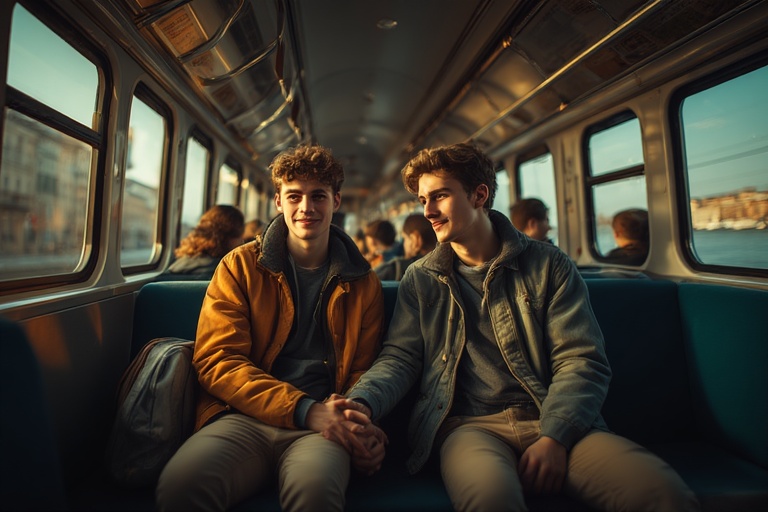
The Frecciarossa hummed beneath our feet, sleek and silver in the afternoon light. We stepped onto the platform, the air thick with the mingled scent of espresso from the station café and warm metal from the tracks. Inside, the carriage was cool and quiet, rows of red leather seats waiting.

We found ours—side by side, window to my left—and I dropped my bag at my feet. As Marco slid in next to me, his knee brushed mine, and neither of us moved away. The train eased forward, Rome slipping past the window in quick, sunlit flashes.

The train eased out of Termini, the low hum under our seats building as the city blurred past the window. Marco settled back like he’d done this a hundred times, one ankle hooked over his knee, his arm stretched comfortably on the shared armrest.

I watched the rooftops of Rome slip away, the skyline breaking into the open green of the countryside. It should’ve been enough to just sit there, but after what happened between us earlier in the week, the quiet felt… strange.

I turned to him. “You know, I don’t actually know that much about you.”

He glanced at me, a faint smirk tugging at his mouth. “What do you want to know?”

“Where do you live when you’re not here?”

“Somewhere I can get a good coffee in the morning,” he said easily, looking back out the window.

“That’s not really an answer.”

“It’s the one you’re getting.” His tone was light, almost teasing, but there was something in the way he said it that made me drop it.

I tried again. “What do you study?”

“Life,” he said, deadpan. When I rolled my eyes, he added, “And art, technically. But I like the first answer better.”

I laughed despite myself. “So you’re just going to give me clever non-answers?”

“I’ll give you what matters,” he said, and this time there was no smirk. “My family’s from here—Italy. My parents moved when they were young, but we’ve still got relatives all over. Summers here growing up taught me one thing: Italy moves slow. Everything does. But your time here? That’s the opposite. It’s finite. So I want to make sure you make the most of it.”

That landed harder than I expected. I didn’t answer right away, just turned to the window, letting the view take over—rolling hills dotted with cypress, small towns clustered around church towers, the sunlight warm and heavy across the fields.

We passed through a stretch where the tracks cut high above a valley, and for a few minutes, I forgot about the questions I wanted to ask.

The announcement for Venezia Santa Lucia broke the quiet. Marco glanced over at me, that glint back in his eyes. “Ready?”

The train slowed, and then we were stepping out into the station—the air different here, salt-tinged and alive, the faint scent of the lagoon riding in on the breeze.

Stepping out of Venezia Santa Lucia station was like walking straight into a painting. The canal was right there, gleaming under the late afternoon sun, a slow procession of gondolas and vaporettos drifting past. The air smelled faintly of saltwater and something rich from the cafés lining the edge.

Marco led the way to the stone railing, and I leaned on it, taking in the rows of pastel buildings rising from the water, their shutters thrown open, laundry swaying in the breeze.

“Okay,” I said, still staring. “This is… ridiculous.”

“In a good way?” Marco asked, his smile knowing.

“In the best way.”

We set off on foot, winding through narrow alleys that opened suddenly into sunlit campos, the sound of lapping water never far. Marco pointed out details I would’ve missed—a faded family crest carved into a lintel, the way the brickwork shifted with the age of the building.

Eventually, we found a gondolier leaning casually on his oar, his boat bobbing gently against the dock. Marco exchanged a few quick words in Italian, and moments later we were seated low in the boat, the water only inches from our sides.

The gondola moved with a slow, almost hypnotic rhythm. The oar dipped and pushed, the boat gliding between narrow canals where the sunlight filtered in strips between the rooftops. I tilted my head back, catching glimpses of balconies heavy with flowers, the scent of them drifting down.

Marco leaned back, one arm resting on the side. “You’re quiet,” he said.

“I’m trying to take it all in,” I admitted. “Feels like if I blink too much I’ll miss something.”

The ride ended near a wide dock, the sounds of the city growing louder. We followed the flow of people until the narrow streets opened suddenly into the vast expanse of Piazza San Marco.

I stopped short.

The basilica rose at the far end, its façade a riot of gold mosaics, marble columns, and intricate arches. The sunlight hit it just right, making the gold shimmer like it was lit from within. The square itself was alive—tourists snapping photos, the flutter of pigeons overhead, the hum of a violin from a nearby café.

Marco let me stand there, just looking. “St. Mark’s Basilica,” he said, as if I needed the name. “And the heart of Venice.”

We crossed the plaza, the sound of our footsteps blending with the echo of voices and music. Inside, the basilica was dim and cool, the scent of centuries-old incense lingering in the air. The golden mosaics overhead caught the light from narrow windows, making the whole place glow.

I walked slowly, my neck craned back, the hush of the space pressing in just enough to feel it.

Marco was beside me, close enough that our shoulders brushed. “You see why I wanted you to come?” he asked.

I nodded. “Yeah. I get it.”

By the time we stepped back into the open air, the light had shifted—warmer now, slanting low across the plaza. The crowds had thinned, the sound of footsteps on stone softer, almost hushed.

Marco led the way through another series of narrow streets until the sound of water grew louder again. We emerged onto the edge of the Grand Canal, where the buildings on the opposite bank glowed in the sunset, their reflections stretching and rippling across the water.

We found a small trattoria with tables pressed up against the railing. The host greeted Marco like they knew each other, and we were shown to a spot right at the edge, nothing between us and the canal but a stretch of iron balustrade.

The menu was short, written in looping Italian script. Marco ordered for us without asking, his tone easy, practiced.

“I take it you’ve been here before,” I said.

“Once or twice,” he replied, the corner of his mouth curling. “Figured I should start you with the good stuff.”

The food came in courses—fresh bread still warm from the oven, a plate of seafood pasta so fragrant I barely paused before diving in. The sun dipped lower as we ate, painting the water in shades of rose and gold.

By the time dessert arrived—a pair of small, perfect glasses of tiramisù—the sky was fading into deep blue, the lamplight flickering on along the waterfront.

Our conversation drifted easily—bits of travel stories, what I thought of Venice so far, his playful insistence that I still hadn’t “really” seen it yet. But under it all was the quiet awareness of how close we were sitting, how his knee brushed mine and didn’t move away, how every time he leaned in to say something, I caught the faint scent of his cologne over the salt in the air.

When the check came, Marco paid without looking at the bill, and we stayed there a few minutes longer, watching the gondolas glide past in the dark, their lanterns casting soft light on the water.

He glanced at me, his voice low. “You’re not in a hurry, are you?”

I shook my head. “Not at all.”

“Good,” he said, standing and holding out a hand. “Then let’s take the long way back.”

TO BE CONTINUED…